ServicesBamboo Removal
Bamboo Removal in Eatonville
Cutting bamboo to the ground only resets the clock. We remove the culms and dig out the rhizome mass that feeds them, then haul all of it away. Before any work starts, you get a written quote that spells out the area, the dig depth and the disposal.
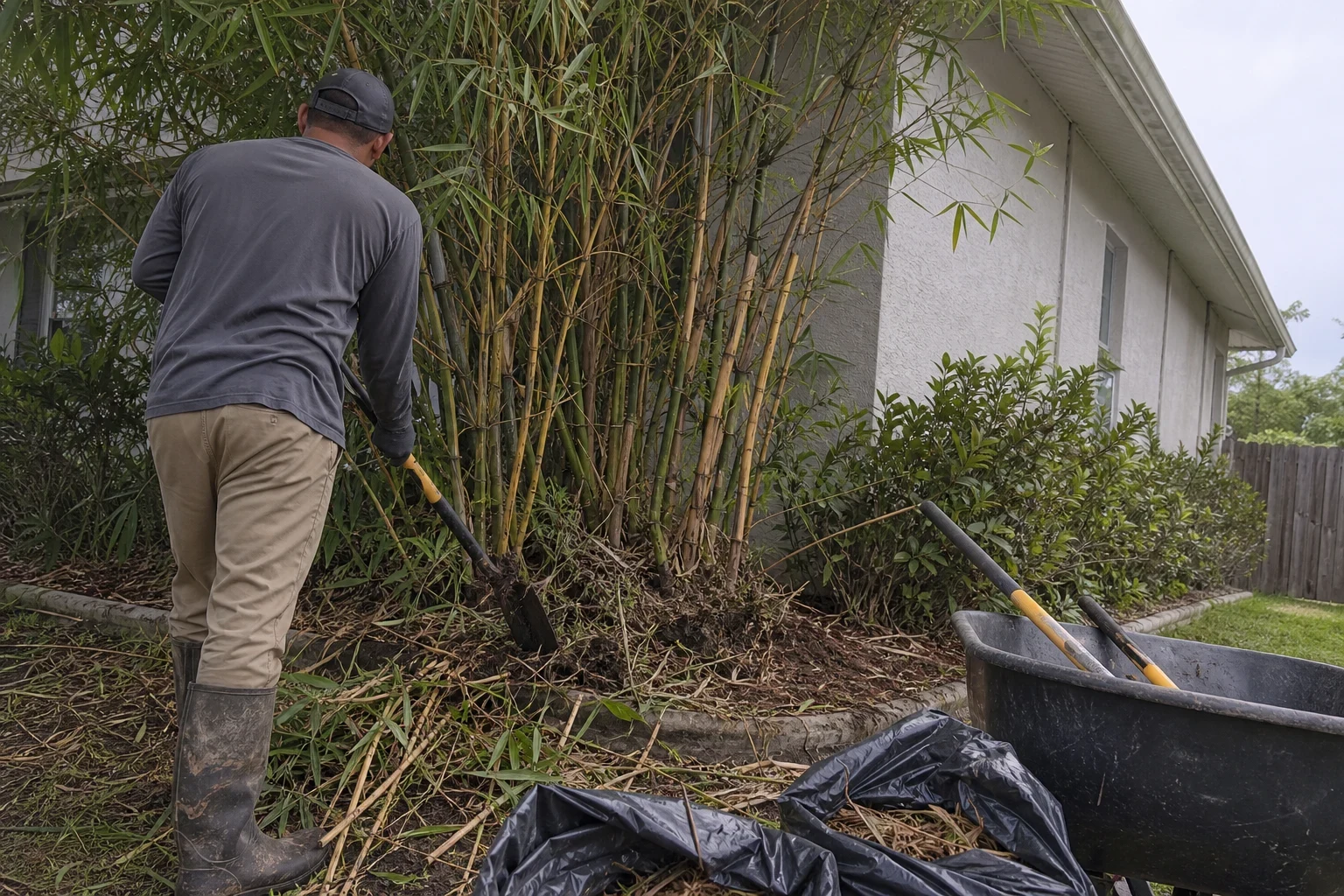
Why bamboo comes back, and how we stop it
Every bamboo cane, or culm, grows from an underground stem called a rhizome. Running types such as golden bamboo send rhizomes sideways, mostly in the top foot of soil, and push up new shoots wherever they travel. Clumping types stay tighter, but their root ball becomes a dense, woody mat that is often wider than the visible clump. If the rhizomes stay in the ground, the stand regrows from stored energy, often within weeks during a warm, wet Central Florida summer.
Bamboo removal is the right call when a stand has outgrown its spot, is pushing under a fence or into a neighbor's yard, or is crowding a bed, a walkway or your home's foundation. It also makes sense before a new project, because sod, planting beds and pavers all suffer when shoots come up through them.
We are a family-owned company, in business since 2018, and we put the scope in writing before we start: how much area, how deep we dig, what gets hauled off and what stays. Once the ground is open, the price does not grow extra line items.
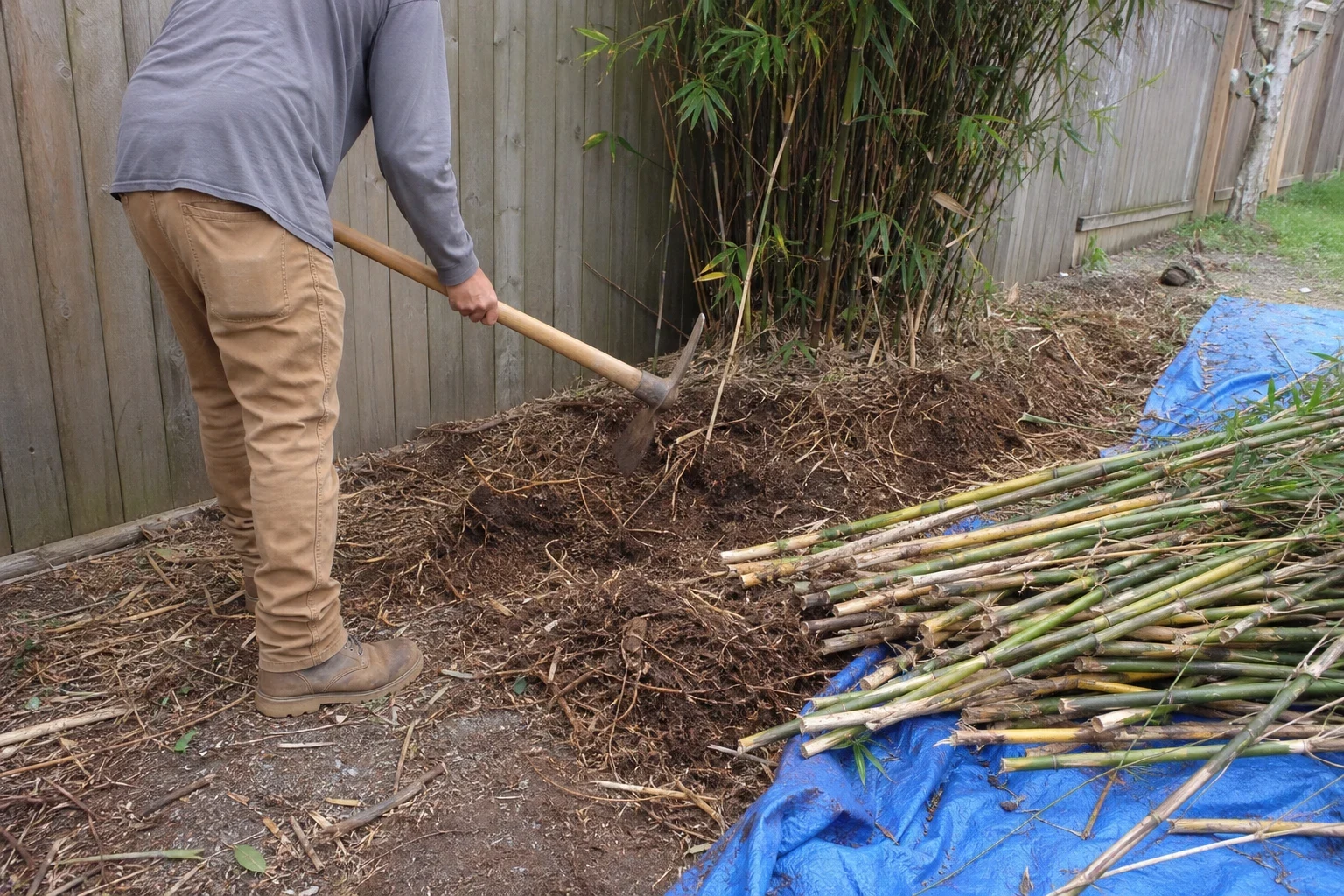
What our bamboo removal includes
- 01
Cutting and clearing the culms
We cut every cane at the base and chip it or bundle it for haul-off. Mature culms are hard and high in silica, so they dull blades quickly, and we bring equipment sized for that.
- 02
Rhizome excavation
We dig out the rhizome mass by hand with root saws and mattocks, or with a compact excavator where access allows. Running rhizomes are traced out toward their tips instead of being pulled only at the clump.
- 03
Sifting the edges
Broken rhizome pieces left in loose soil can sprout. We rake and sift the soil at the edges of the dig to pull out fragments before backfilling.
- 04
Haul-off and disposal
All bamboo debris leaves your property. We never bury it or pile it along the back fence, where cut rhizomes can re-root.
- 05
Root barrier for stands you keep
If you want to keep part of a stand, we can install a vertical HDPE root barrier around it, set roughly two feet or more deep with a lip left above grade so rhizomes cannot arch over the top.
- 06
Backfill and grading
We backfill the hole and grade it level, leaving the area ready for sod installation, new mulch beds or a fresh planting plan.
Questions about Bamboo Removal?
Call(407) 537-4177Signs it is time to remove your bamboo
Shoots far from the clump
New shoots in the lawn, a bed or a neighbor's yard several feet from the stand mean running rhizomes are spreading underground.
Pressure on fences and paving
Rhizomes push under fence posts, lift pavers and work into joints along driveways and patio slabs. Left alone, they can tilt posts and open gaps.
Irrigation trouble near the stand
The dense root mat can squeeze poly lines and bury spray heads. Low pressure or dry patches close to bamboo are a common clue.
A clump too wide to manage
Clumping bamboo that has spread well past its original footprint, with dead culms packed in the center, has outgrown routine trimming.
Cutting it back made it thicker
If you mowed or cut the stand down and it came back denser, the rhizomes are still feeding it. That underground network is the part that has to come out.
How a bamboo removal job runs
- 1
Walkthrough and probing
On the free walkthrough we identify the bamboo type, measure the stand and probe the edges to see how far rhizomes have run. We also note fences, slabs, irrigation lines and nearby trees.
- 2
Written quote and utility locate
You get a written scope listing the area, dig method, disposal and any barrier or restoration. Before digging, we request a Sunshine 811 locate so buried utility lines are marked.
- 3
Cut, dig and sift
We clear the culms first so we can see the ground, then excavate the rhizome mass and sift the edges. Where equipment travels across turf, we lay down plywood or ground mats.
- 4
Haul-off, backfill and cleanup
Debris is loaded out, the hole is backfilled and graded, and walkways and drives are blown clean before we leave.
- 5
What to watch for afterward
A few shoots from deep fragments can appear in the first months. We show you how to snap them off at the soil line so the remaining pieces run out of energy.
What moves the price of bamboo removal
Bamboo jobs vary more than most yard work because the hard part is underground. We measure and probe before pricing anything, and the written estimate breaks out each item so you can see what drives the total. When a bigger project is easier to pay over time, we offer financing of up to $100,000, with terms anywhere from 2 to 12 years and no penalty for paying it off early.
- Size and density of the stand
- A thick stand of mature culms means more cutting, more chipping and a heavier rhizome mat to dig than a young, sparse one.
- Running or clumping type
- Running bamboo spreads in long rhizomes that must be traced and dug across a wider area. Clumping bamboo is more contained but the root ball is dense and slow to break apart.
- Equipment access
- A gate wide enough for a compact excavator lets us dig much faster. A stand in a narrow side yard has to be done by hand.
- What sits next to it
- Fence posts, slabs, irrigation lines and tree roots all call for slower hand digging close in.
- Disposal and restoration
- Debris volume, a root barrier, and any sod or bed work afterward are each listed as separate items so you can choose what to include.
Bamboo removal questions
Can't I just spray it with herbicide?
On an established stand, herbicide alone rarely finishes the job, because the rhizome network stores enough energy to keep pushing new shoots for a long time. It may help with scattered regrowth later. Digging out the rhizomes is what actually ends the stand, and that is the method we recommend and price.
Will the bamboo grow back?
Not from the rhizomes we remove. Small fragments left deep in the soil or under a slab can send up a few shoots in the first season, and snapping those off as they appear starves them out. If part of the stand is outside what we can dig, such as rhizomes under a neighbor's fence, the written estimate says so up front.
The bamboo is coming from my neighbor's yard. What can you do?
We can remove everything on your side and install a root barrier along the property line to block new rhizomes. If your neighbor keeps their stand, that barrier is what keeps your side clear.
Will you damage my lawn, fence or sprinklers?
We plan the access path, lay protection where equipment travels and hand-dig near fence posts and known irrigation lines. Rhizomes sometimes wrap old pipe, and if a line has to be cut to free it, we tell you before we cut and can repair it through our irrigation service. We are fully insured for the work we do on your property.
How long does a removal take?
A single small clump is often finished in one day. A running stand that has spread across a yard can take several days, depending on access and how far the rhizomes have traveled. Your written estimate states the expected schedule.
See exactly what your bamboo job involves
We will walk the stand with you, probe the edges and follow up with a written quote covering the area, the dig and the disposal. The walkthrough and estimate cost you nothing.