ServicesTree Trimming and Removal
Tree Trimming and Removal in Eatonville
We prune trees with clean cuts that heal, clear limbs off your roof and take down trees that are dead or failing. Before any saw starts, you get a written quote that names each tree, the work on it and what happens to the debris.
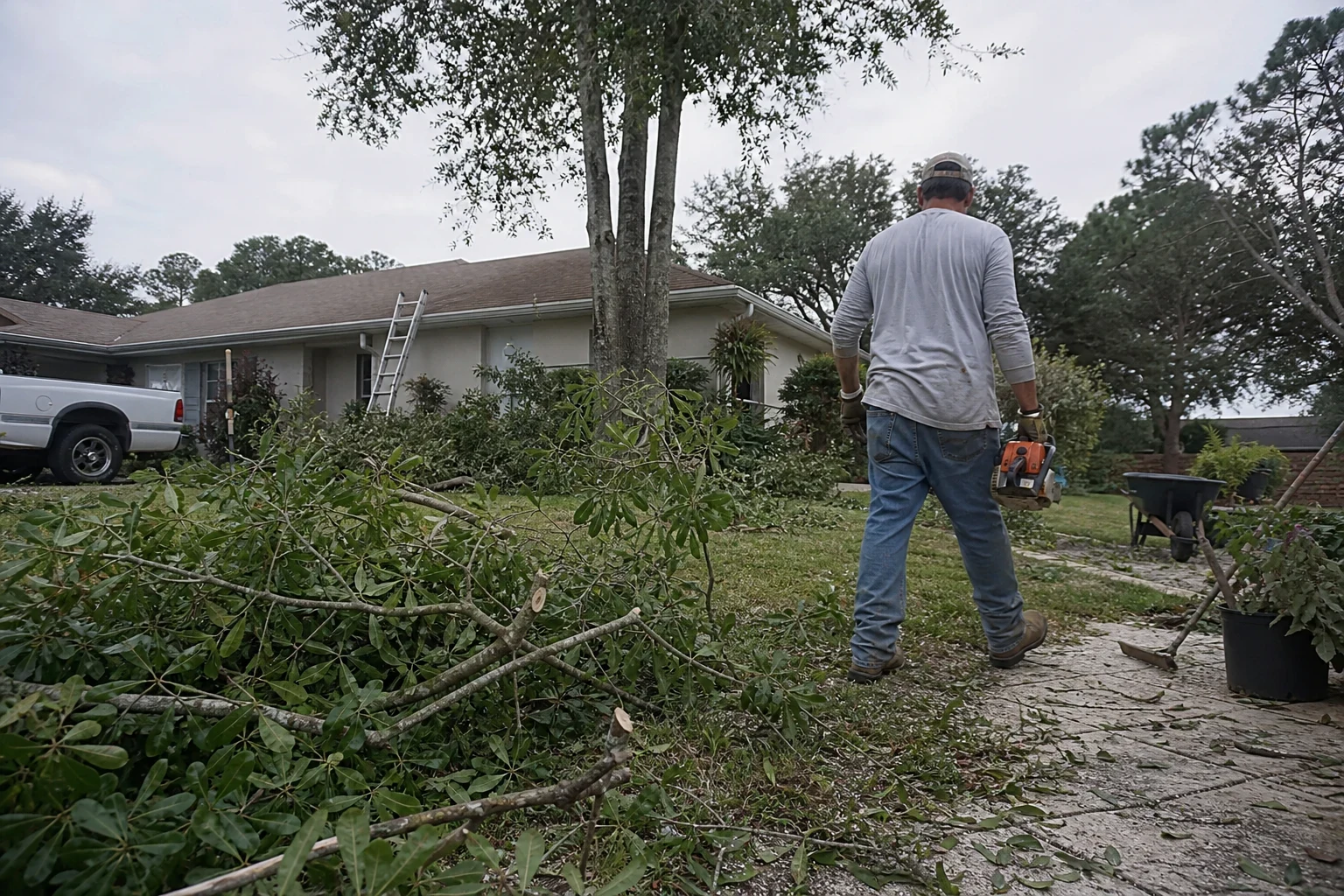
Pruning that helps the tree, removal when it can't be saved
Good trimming is about where the cut goes. We cut just outside the branch collar, the swollen ring where a limb meets the trunk, so the tree can seal the wound. We thin crowded canopies so wind passes through, and we remove dead, crossing and rubbing limbs. We don't top trees or strip the inner branches down to a tuft at the tips, because both leave weak regrowth that breaks in the next big storm.
Sometimes a tree is past saving. Laurel and water oaks common around your home tend to decay from the inside after a few decades, and sandy soil gives shallow roots little to hold. When a trunk is hollow or the root plate is lifting, we'll tell you plainly that removal is the safer call and show you why.
We're a family-owned company, in business since 2018, and fully insured for the climbing, rigging and felling this work involves.
What tree work with us includes
Structural and crown pruning
We remove dead wood, reduce long heavy limbs and thin the crown so it carries less wind load. On young oaks we train a single central leader early, which is far cheaper than correcting a split trunk later.
Roof and structure clearance
Branches resting on shingles scrape granules off and hold leaf litter in valleys. We cut limbs back to a clear distance from the roofline, screen enclosures and fences.
Hurricane-season prep
Before June we look for weak branch unions, deadwood over the house and heavy limbs on the storm side. Trimming is targeted, not a heavy strip that leaves the tree stressed going into summer.
Controlled tree removal
In open yards we fell in one piece. Near the house, pool or a neighbor's fence, we climb and lower sections by rope so nothing drops uncontrolled.
Debris hauling and cleanup
Brush is chipped and logs are cut and hauled, or left stacked as firewood if you ask. Your quote says which. We rake and blow the work area before we leave.
Stump options
Removal leaves a stump at ground level unless you add our stump grinding service. It is listed as its own line, so you decide whether it's worth it.
Signs a tree needs trimming or removal
Mushrooms or conks at the base
Shelf-like fungus on the lower trunk or root flare usually means wood decay inside. The tree can look full and green while the base loses strength.
Cracks, cavities or a split fork
A vertical crack or a V-shaped fork with bark pinched between the stems is a common failure point. These unions often tear apart under storm winds.
Dead limbs over the house
Bare, brittle branches with peeling bark won't flex in wind. They drop without warning, often onto roofs and cars.
A new lean or lifting soil
A tree that has always leaned is often fine. A lean that appeared after a storm, with cracked or mounded soil on the far side, means the roots have moved.
Branches touching the roof
Constant rubbing damages shingles and gives squirrels and rats a bridge onto the house.
How a tree job runs
- 1
On-site walkthrough
We look at each tree with you, check the trunk, crown and root zone, and talk through what you want trimmed or removed. If a tree near a power line needs work, we'll tell you when the utility has to handle it.
- 2
Written quote
You get the scope in writing: which trees, which cuts, removal method, debris handling and any stump grinding. If a local permit applies to a removal, we note it before scheduling.
- 3
Setup on the day
We mark a drop zone, move what we can out of the way and lay plywood over soft lawn where equipment rolls. Climbers rope in and rigging goes up before any large cuts.
- 4
Cutting and lowering
Limbs come down in sections sized to the rigging, lowered away from roofs, screens and plantings. We work top to bottom so the crew below always knows what's coming.
- 5
Cleanup and walk-around
Chipping, hauling and raking finish the job. We walk the yard with you so you can see the cuts and confirm everything on the quote was done.
What sets the price of tree work
Two trees of the same height can price very differently. The job depends mostly on how the wood has to come down and where it can land. Every factor below is written into your quote, so the number you approve is the number you pay. If a large removal is easier to handle over time, we offer financing as high as $100,000, with terms anywhere from 2 to 12 years and no penalty for paying it off early.
- Height and spread
- Taller trees with wide canopies take more climbing time, more cuts and produce more debris to chip and haul.
- Drop zone and access
- An oak in an open front yard can be felled whole. The same tree in a fenced backyard over a pool cage has to be roped down piece by piece.
- Tree condition
- Dead or decayed wood is brittle and unpredictable, so we rig more of it and cut more carefully. Hollow trunks also limit where climbers can tie in.
- Debris and stump choices
- Hauling all wood costs more than leaving logs stacked on site. Stump grinding is optional and priced separately.
Tree trimming and removal questions
Something not covered here? (407) 537-4177
What time of year should my trees be pruned?
For most shade trees we prefer the weeks between the end of winter and early spring, just before new leaves push out, because cuts seal fastest then. Storm-prep pruning is best wrapped up before hurricane season opens in June. Dead or hazardous limbs don't need to wait for any particular season.
Do I need a permit to remove a tree?
It depends on the tree and the rules that apply to your property. Some local governments require a permit for certain species or trunk sizes, and a tree that is documented as dangerous may be handled differently. We check what applies before we finalize your quote.
Will you top my tree to make it shorter?
No. Topping cuts through large limbs at random points, which invites decay and triggers clusters of weakly attached shoots. If height is the concern, we use reduction cuts back to a lateral branch big enough to take over, which shortens the tree without wrecking its structure.
Can you take down a tree that leans toward my house?
Yes. We don't fell it whole. A climber ties in above the work, and each limb and trunk section is cut, then lowered by rope through a pulley anchored in the tree or a neighboring one. The rigging plan, including where pieces will land, is part of the written quote.
Will your equipment damage my lawn?
We keep heavy gear to firm ground and lay plywood over turf where we have to cross it. Large rounds are lowered by rope instead of dropped. Expect some flattened grass in the drop zone, which usually recovers within a few weeks.
Get your tree work scoped and priced before anyone climbs
We'll walk your property, look at each tree with you and put the full scope and price in writing. The walkthrough and estimate are free.