ServicesHardscape Installation
Hardscape Installation in Eatonville
We build paver patios, walkways, driveway extensions and low garden walls on a properly excavated and compacted base, so the surface stays flat and drains away from your home. Before we dig, you get the full scope and every pricing factor in writing.
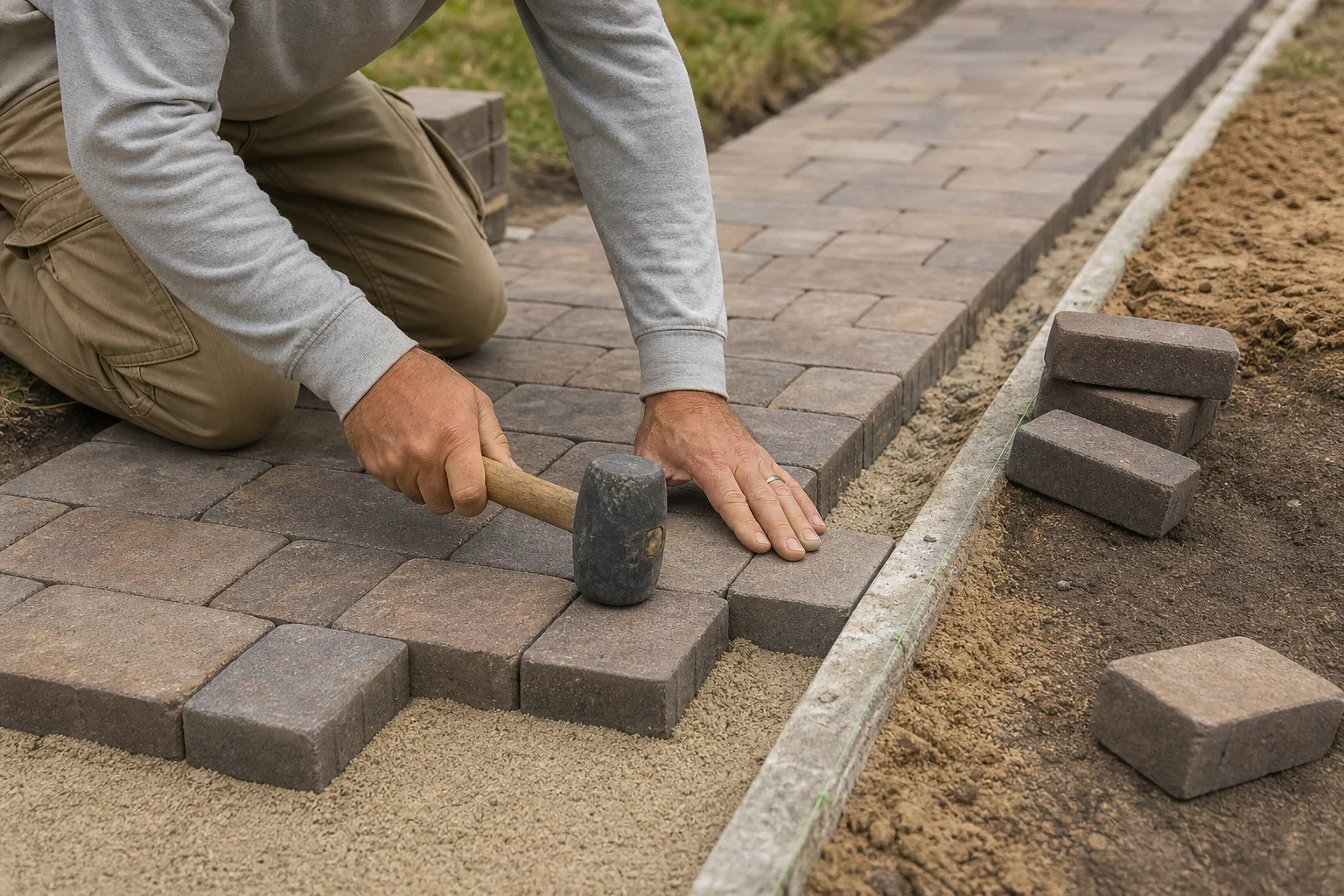
Hardscape that holds its shape
When we say hardscape, we mean the stone, block and paver features that give your yard structure: patios, paths, steps, borders, fire pit pads and short retaining walls. Most failures you see, like sunken pavers, rocking stones and weeds in every joint, trace back to what is under the surface rather than the pavers themselves. Sandy soil that was never compacted, a base that is too thin, or no edge restraint will let the field shift within a few rainy seasons.
Our crews start every job at the base. We excavate, lay and compact crushed aggregate in lifts, screed a bedding layer, and pitch the surface so water runs off instead of pooling against your foundation. Our family-owned company has been doing this work since 2018, and we are fully insured, which matters when heavy equipment and excavation are happening a few feet from your house.
We write the estimate the same way we build: line by line. You see the square footage, base depth, material choice, edging and drainage items before you agree to anything, so the number you approve is the number you pay.
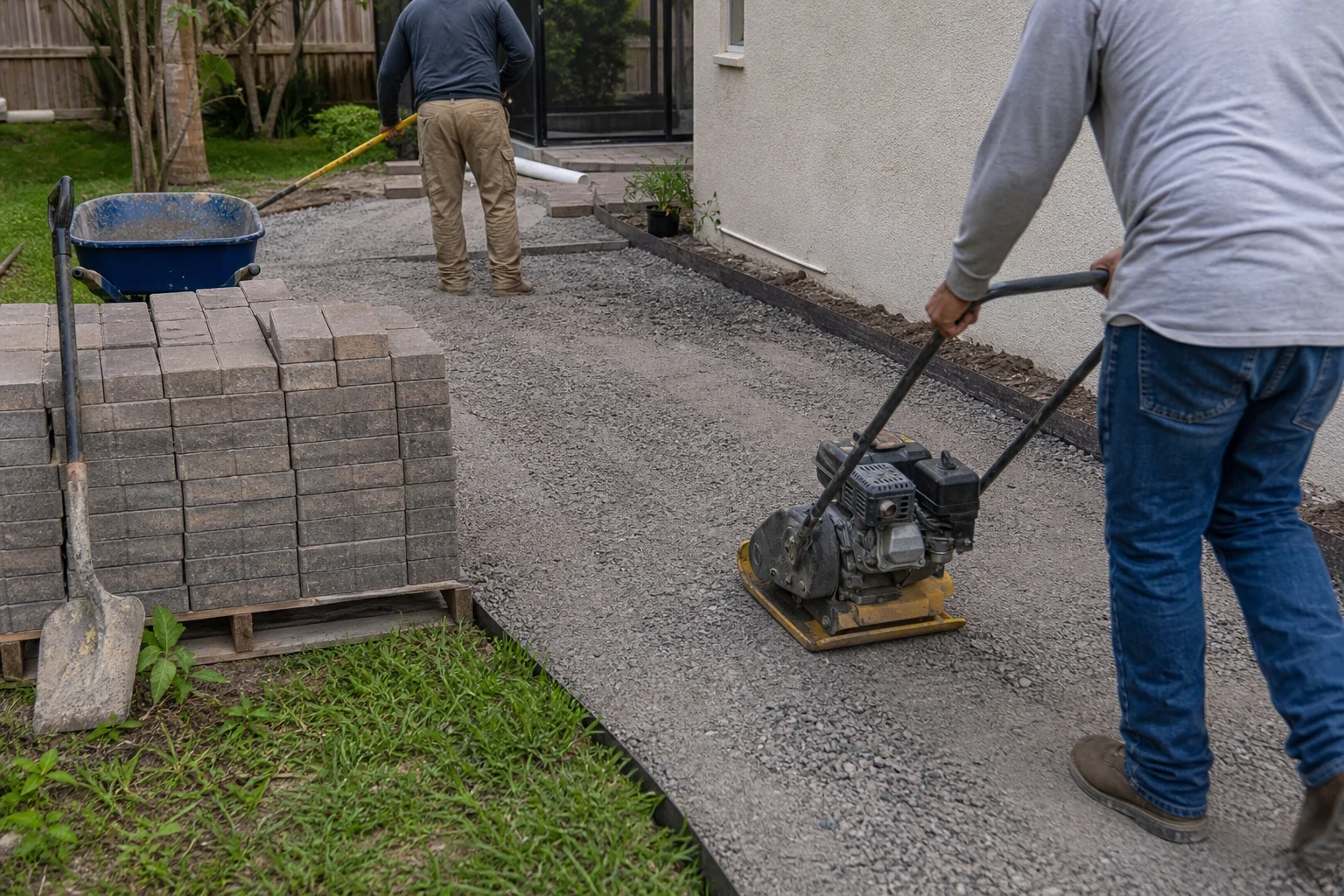
What our hardscape work covers
- 01
Paver patios and pool-side areas
Concrete pavers, travertine or tumbled pavers laid in the pattern you choose. Herringbone patterns lock together best where furniture or foot traffic is heavy.
- 02
Walkways and garden paths
Front entry walks, side-yard paths to the trash area, and stepping-stone routes through beds. We set path width so two people can pass and a wheelbarrow can still turn.
- 03
Driveway extensions and parking pads
Vehicle areas get a deeper aggregate base and a thicker paver than a patio. That extra depth keeps tire loads from pressing ruts into soft sand.
- 04
Low retaining and seat walls
Segmental block walls for raised beds, grade changes and built-in seating. We bury the first course, backfill with drainage stone, and cap the top.
- 05
Fire pit pads and edging
Fire pit surrounds set on a noncombustible base, plus concrete or plastic edge restraint around every paver field so the outer rows cannot creep.
- 06
Joint sand and sealing
We sweep in polymeric sand and activate it with a light mist, which hardens enough to resist washout and slow weed and ant intrusion. Sealing is available as a line item if you want color enhancement or stain resistance.
Questions about Hardscape Installation?
Call(407) 537-4177Signs your yard needs hardscape work
Water pools near your house
If rain sits on an old slab or runs toward your foundation, the grade is wrong. A new patio pitched about a quarter inch per foot sends it away.
Pavers have sunk or tilted
Low spots and rocking stones mean the base settled or washed out. Resetting just the top layer rarely lasts, so we check base depth first.
Grass will not grow in a high-traffic strip
A worn path across the lawn or a bare shady patch is often a better spot for a walkway than for more sod.
A cracked concrete slab
Old poured patios crack as soil moves underneath. Pavers can flex with small movement and individual units can be lifted and reset later.
Soil washing out of a slope
Mulch and sand sliding onto the walk after storms point to a grade change that a short block wall would hold.
How a hardscape job runs
- 1
On-site walkthrough
We measure the area, check slope and drainage, look for irrigation lines and utilities, and talk through materials. If you have an HOA, this is the time to gather what they will want to see.
- 2
Written quote and layout
It lists square footage, base depth, materials, edging, demolition and haul-off. We mark the layout with paint or string so you can stand in the space before you commit.
- 3
Excavation and base
We dig to depth, remove spoil, and compact crushed aggregate in layers with a plate compactor. Any sprinkler heads or lines in the way are capped or rerouted, and that work is spelled out in writing beforehand.
- 4
Laying, cutting and edging
Pavers go down on a screeded sand bed, cuts are made with a wet saw to keep dust down, and edge restraint is spiked in along the borders.
- 5
Joints, cleanup and walk-through
We compact the finished field, sweep in polymeric sand, blow off the surface and clear all debris. Then we walk it with you before we leave.
What sets the price of your hardscape project
Two things drive most of the number: the material that goes into the ground and the soil that has to come out of it. We break each one out as a separate line on your written quote, so the total does not grow once the crew arrives. For larger projects, financing up to $100,000 is available on 2–12-year terms, no prepayment penalties.
- Size and outline
- Total area decides how much aggregate, bedding sand and paver we order. A curved or angled outline takes extra saw time, and the trimmed offcuts usually cannot be reused elsewhere in the field.
- Which paver you pick
- Basic concrete pavers keep the budget lowest. Travertine and textured premium units cost more to buy, and their weight and density make them slower to cut and set.
- What the surface has to carry
- A garden path carries foot traffic and needs a shallow dig. A parking pad carries cars, so it gets a deeper excavation, more compacted aggregate and a thicker paver.
- Tear-out and getting in
- Breaking up an old slab and trucking away the rubble and spoil adds hours. So does a backyard reached only through a narrow side gate, where material moves by wheelbarrow instead of machine.
- Walls, steps and water
- Retaining block courses, steps, drain lines and sprinkler changes each show up as their own line, so you can see what every add-on contributes.
Hardscape installation questions
Why do pavers sink, and how do you prevent it?
Pavers sink when the soil and base under them were not compacted or were washed out by water. We excavate, compact crushed aggregate in lifts, and install edge restraint so the field stays locked. Proper slope keeps runoff from undermining it.
Should I choose pavers or poured concrete?
Concrete costs less up front in many cases but tends to crack as the soil moves, and repairs show. Pavers handle small movement and can be lifted and reset in sections. We will lay out both options honestly at the walkthrough.
Will you damage my sprinkler system?
We locate heads and lines during the walkthrough and plan around them. Anything that has to move is capped or rerouted, and that work appears on the estimate. Our Irrigation service can adjust coverage after the patio is in.
Do I need a permit or HOA approval?
Many patios and walkways do not need a building permit, but some walls, driveway work and drainage changes may. We check what your project requires, and if you have an HOA we can provide drawings and material samples for your submission.
How long does installation take?
An average patio or walkway takes a few working days from excavation to joint sand, depending on size and weather. Heavy rain can pause base work, since compacting wet sand gives a poor result. We give you a schedule along with your written estimate.
Can hardscape be planned with new plantings?
Yes. Many customers pair a patio with our Landscape Design or Mulch and Beds work so borders and plants fit the new layout. Planning both together also lets us set bed edges and paver edges in one pass.
Plan your patio with real numbers
We will measure, check drainage and talk through materials at your home, then put the scope and cost in writing. The estimate is free.