ServicesMulch and Beds
Mulch and Bed Work in Eatonville
We pull weeds by the root, cut a crisp edge and lay mulch at a depth that holds moisture without smothering roots. Before any work starts, you get a written estimate listing bed square footage, mulch type, depth and any removal, so the price you see is the price you pay.
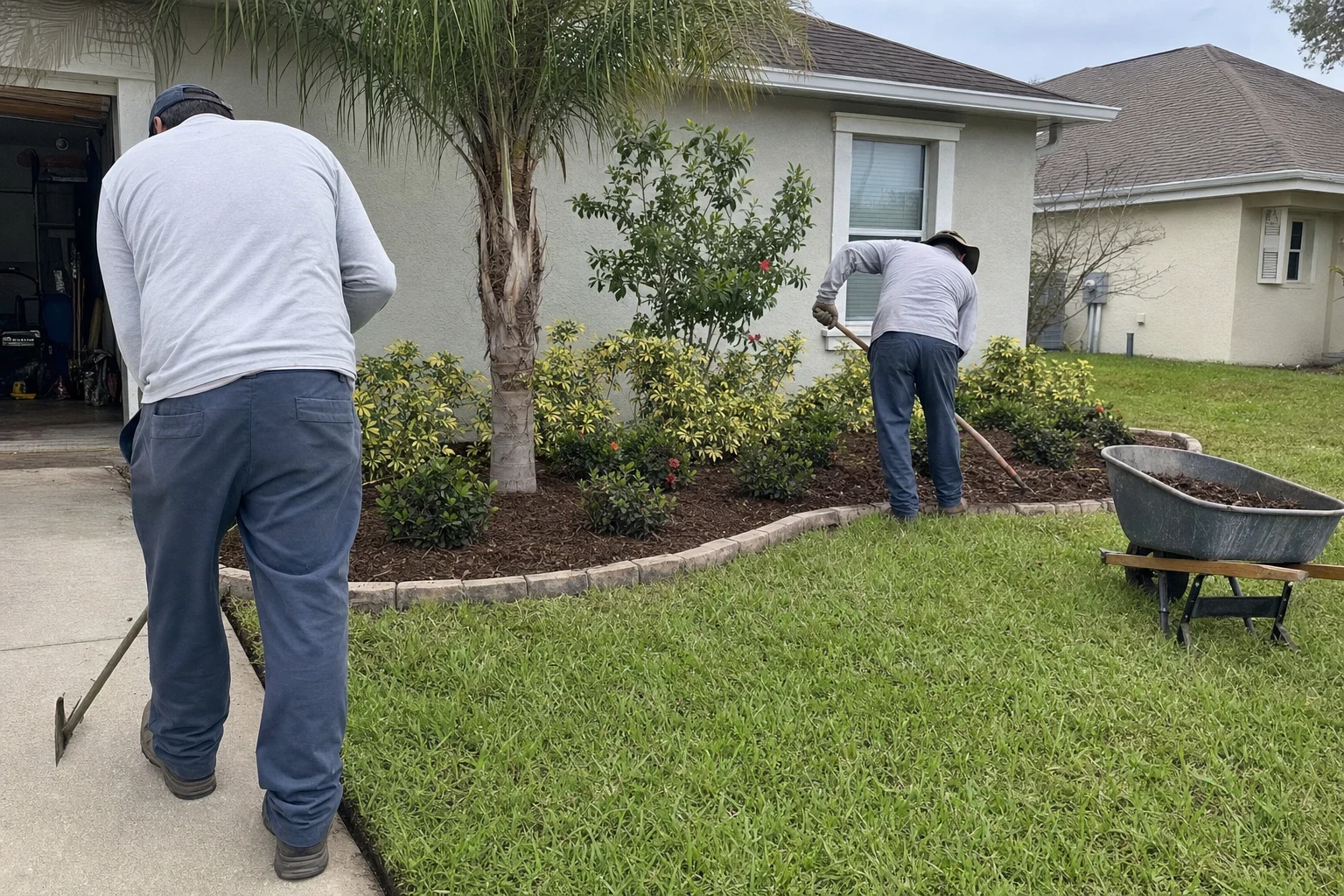
What Good Bed Work Actually Does
Mulch is not just a color layer. A 2 to 3 inch blanket of organic mulch slows evaporation from sandy soil, keeps root zones cooler in summer and blocks the light weed seeds need to sprout. As it breaks down, it adds organic matter to soil that has very little of its own. Laid too thin, it washes off in the first heavy afternoon storm. Piled too deep, it holds water against bark and starves shallow roots of air.
Most beds we see need more than a fresh top coat. Old mulch has matted into a crust that sheds water, torpedograss or nutsedge has crept in from the lawn, and the edge has slumped until turf and bed run together. We fix those causes first, then mulch. Every step and its cost is written into your quote before we schedule the day, so nothing gets added once the truck arrives.
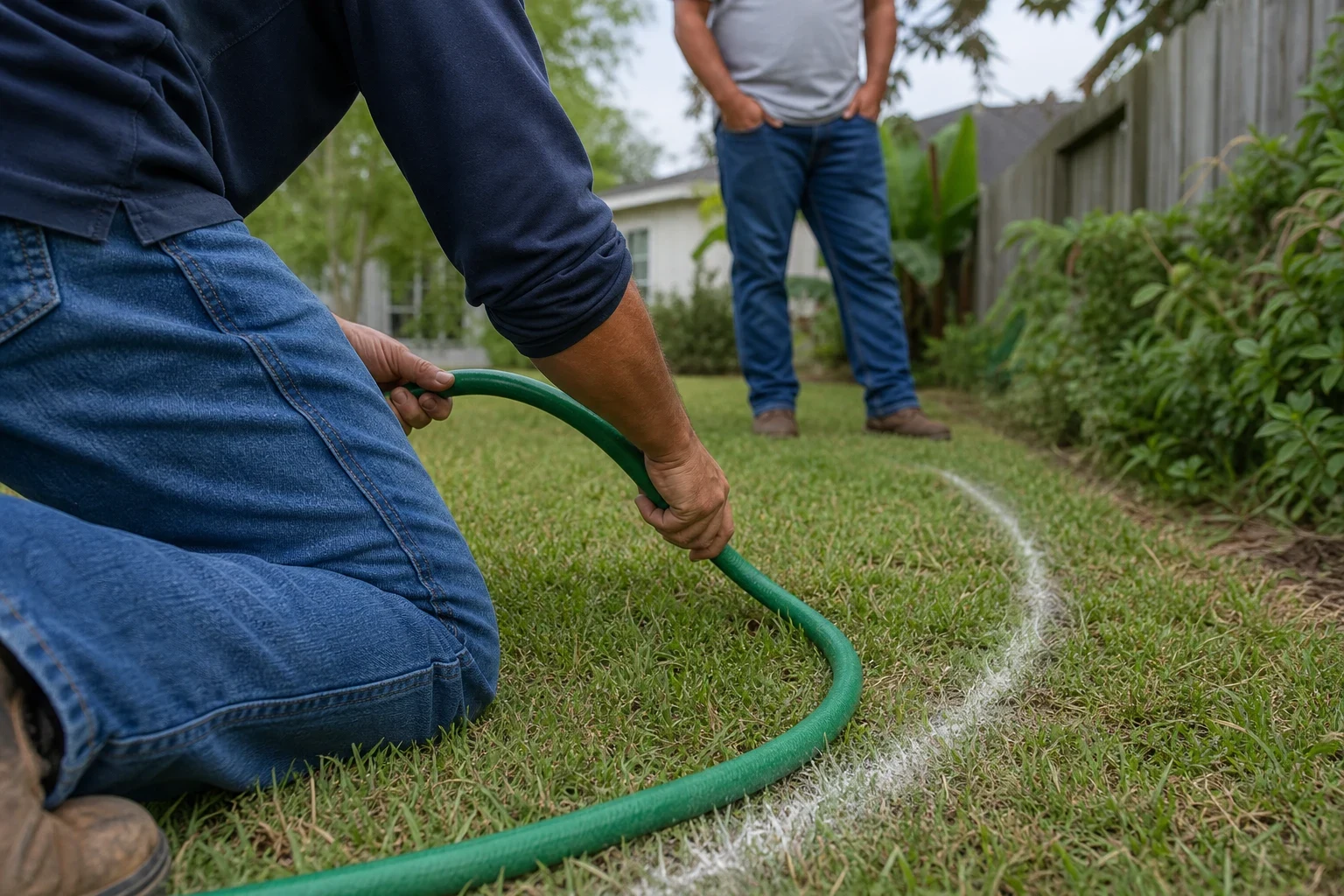
What Our Mulch and Bed Service Includes
- 01
Weed and grass removal
We pull weeds and invading turf with the roots and runners, not just the tops. Torpedograss and nutsedge regrow from rhizomes and tubers, so surface pulling only buys a few weeks.
- 02
Old mulch assessment
If the existing layer is thin and loose, we rake and top it up. If it has matted, gone sour or built up past 4 inches, we remove some or all of it so new mulch sits at the right total depth.
- 03
Edge cutting or edging install
We cut a clean spade edge with a small trench that keeps mulch in and grass out. If you want a permanent border, we install the edging material you choose and list it as its own line on your estimate.
- 04
Mulch at a measured depth
We lay pine bark, pine straw or hardwood mulch at 2 to 3 inches, pulled back a few inches from trunks, plant crowns and your home's foundation. That gap prevents bark rot and keeps moist organic material away from the slab and siding.
- 05
Work around drip lines and heads
We locate drip tubing and spray heads before we spread, keep them uncovered and flag anything damaged. If the bed needs irrigation changes, we explain them and our Irrigation service can handle it.
- 06
Cleanup
Weeds, old mulch and bags leave with us, and walks and driveways are blown clean.
Questions about Mulch and Beds?
Call(407) 537-4177Signs Your Beds Need Attention
Bare soil showing through
Heavy rain and decomposition thin mulch faster than most people expect. Exposed sand dries out quickly and gives weed seed a place to germinate.
Water beads and runs off
Old mulch can mat into a crust that sheds water instead of letting it soak in. Plants underneath stay dry even when the sprinklers run.
Grass growing into the bed
Once the edge slumps, lawn runners move in and compete with your shrubs. The longer it goes, the deeper the roots get.
Mulch piled against trunks
Volcano-style mounds hold moisture against bark, which invites rot, fungus and insects. Trees and palms suffer from this slowly, then all at once.
Mulch touching the house
Organic mulch packed against the foundation holds moisture where you do not want it. We pull it back and leave a clear strip.
How a Bed Job Runs
- 1
Walkthrough and measurements
We walk your beds with you, measure square footage, check current mulch depth and look at edges, weeds and drip lines. You tell us the look you want and we explain which mulch suits each bed and why.
- 2
Written estimate
You get a document that lists each bed's size, the mulch type and depth, removal work and any edging. If something is optional, it is marked optional so you can decide.
- 3
Prep day
We weed, remove old material where agreed, cut edges and rake the soil level. Drip lines and heads are located before anything new goes down.
- 4
Mulch and cleanup
Mulch is spread evenly by hand, pulled back from trunks and the foundation, and lightly watered in to settle it. We finish by clearing walks and walking the beds with you.
What Moves the Price of Bed Work
Bed work is priced mostly by area, depth and how much prep the beds need. We measure on site and write each of those into your quote so you can see where the cost comes from. For larger bed overhauls, you can spread the cost out: we offer financing of up to $100,000, with terms anywhere from 2 to 12 years and no penalty for paying it off early.
- Square footage and depth
- Volume of mulch is area times depth. A 3 inch layer over a large bed takes noticeably more material than a 2 inch top-up.
- Mulch type
- Pine straw, pine bark nuggets, shredded hardwood and dyed mulch differ in cost per bale or yard and in how long they last before needing a refresh.
- Removal and weed load
- Stripping matted mulch or digging out established torpedograss adds labor and hauling. Light weeding over a thin layer adds little.
- Edging choice
- A cut spade edge is the simplest option. Metal, plastic or concrete curbing adds material and install time, priced per linear foot.
- Access
- Beds behind fenced yards or far from the driveway mean more wheelbarrow trips, which we account for after seeing the layout.
Mulch and Bed Questions
Which mulch works best here, pine straw or bark?
Pine straw knits together and resists washing on slopes, but fades and needs refreshing more often. Pine bark nuggets last longer and look tidy, though small nuggets can float in heavy downpours. We often suggest straw for sloped or drainage-path beds and bark or hardwood on level beds near walks.
Should you put landscape fabric under the mulch?
Usually not in planted beds. Fabric blocks mulch from breaking down into the soil, and over time a layer of decomposed mulch builds up on top where weeds root anyway. We may use it under rock or in specific spots, and we will explain why if we recommend it.
How often do beds need new mulch?
Most organic mulch needs a top-up about once a year, sometimes twice for pine straw. We check depth at the walkthrough and only price what brings the bed back to 2 to 3 inches, not a full new layer if you do not need one.
Will the crew damage my drip irrigation?
We locate drip tubing and heads before spreading and keep them clear. If we find a line that is already cracked or a head buried in old mulch, we show you and note it rather than covering it up.
Who does the work, and are you covered if something goes wrong?
We are a family-owned company that has been in business since 2018, and we are fully insured. The same people who walk your beds and write up the scope are the ones who come out to do the work.
Get Your Beds Measured and Quoted
We will walk your beds, check depth, edges and weeds, and give you a written estimate listing exactly what we will do. Your estimate is free.