ServicesIrrigation
Irrigation Repair and Installation in Eatonville
We find out why your sprinklers miss, flood or never turn on, then fix the heads, valves, lines or controller behind it. Before any digging, you get a written scope that lists each part and each pricing factor, so the bill matches what you agreed to.
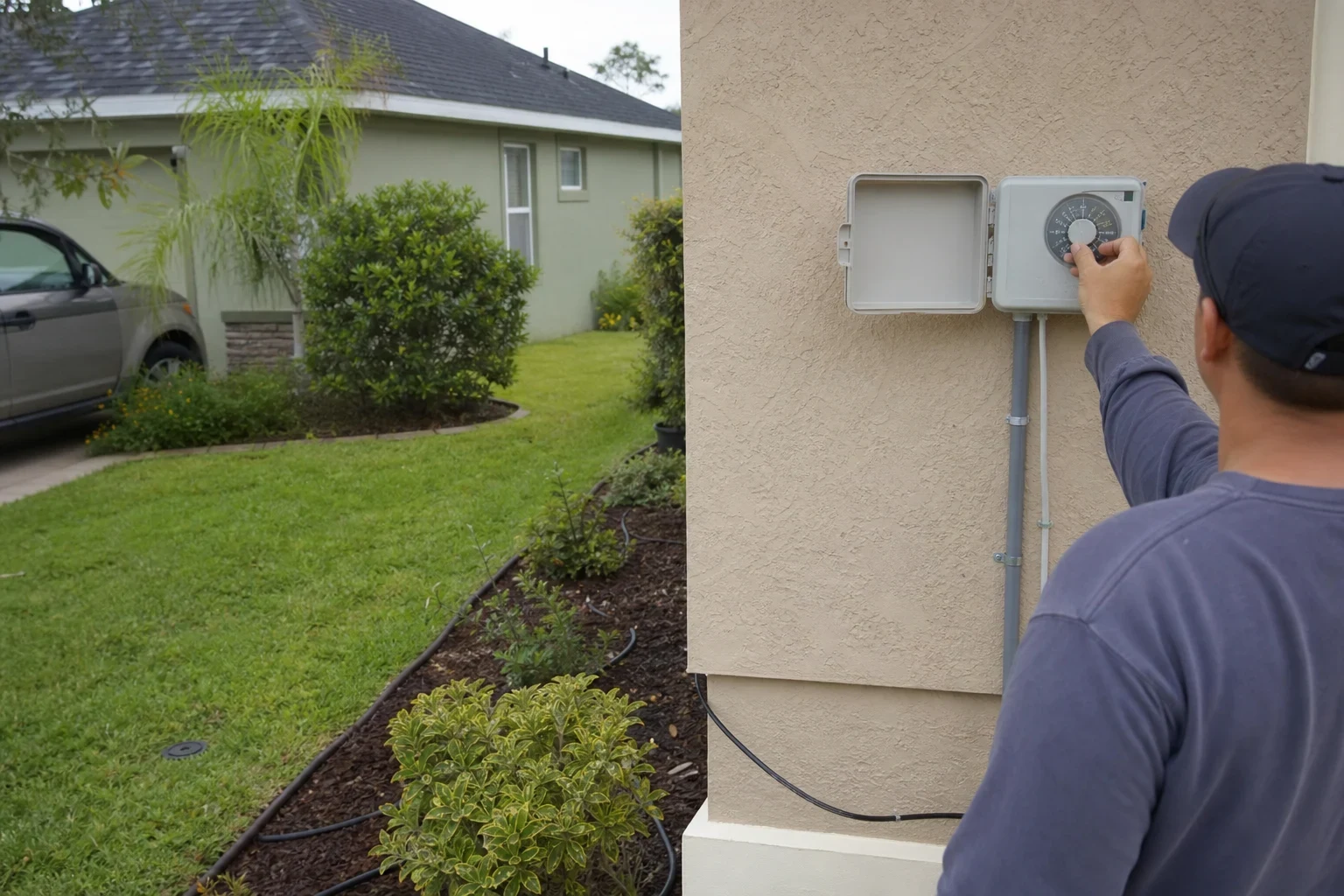
Water Where the Roots Are, Not on the Driveway
An irrigation system is a set of parts that have to agree with each other: a controller, zone valves with solenoids, PVC lateral lines, and heads matched to the area they cover. When one piece drifts, a spray head tilts or a valve diaphragm tears, you get dry patches beside soggy ones and a water bill that climbs.
Central Florida's sandy soil drains fast and holds little, so a lawn depends on short, even watering on its allowed days. That makes coverage and timing matter more here than in heavier soils. We service existing systems, extend them to new beds, convert planting areas to drip, and design new systems from the meter or well onward.
We are a family-owned company in business since 2018, and we write up what we found and what each fix involves before we pick up a shovel.
What Our Irrigation Work Covers
Zone-by-zone testing
We run every zone from the controller and walk it while it runs. We note heads that are sunk, tilted, clogged, broken or spraying the house, and we check pressure at the far end of each line.
Head and nozzle repair
We replace cracked spray bodies and stuck rotors, raise heads that grass has swallowed, and match nozzle arcs and flow rates within each zone. Mixing rotors and sprays on one valve is a common cause of uneven coverage, and we separate them when we find it.
Valve and wiring repair
A zone that won't shut off usually points to a worn diaphragm or debris under the seat. A zone that won't start often traces to a failed solenoid or a nicked wire. We test with a meter instead of guessing.
Controllers and rain sensors
We install and program controllers to fit local watering-day rules and add or replace the rain sensor that Florida requires on automatic systems, so the system skips a cycle after a storm.
Drip conversion for beds
Shrub and flower beds do better on drip tubing with emitters than on overhead spray. Less water lands on leaves and mulch, and more reaches the root zone.
New systems and extensions
For new sod or a redesigned yard, we lay out zones by sun exposure and plant type, trench, run lines, set heads and flush everything before backfill.
Signs Your Sprinkler System Needs Attention
Brown stripes or circles
Dry arcs in an otherwise green lawn usually mean a blocked nozzle, a head knocked out of alignment, or spacing that never gave head-to-head coverage.
Soggy spots or a geyser
Standing water between heads often comes from a cracked lateral line or a broken riser, sometimes from a mower strike or root pressure.
A zone that runs on its own
If water keeps trickling after the cycle ends, a valve is not seating. Sand and grit in the line are frequent culprits.
Weak spray at the end of a line
Low pressure on the last few heads means too many heads on one valve, a partly closed flow control, or a leak somewhere upstream.
A water bill that jumped
An unexplained rise with no change in schedule is worth a walkthrough. Hidden leaks under turf can run for weeks before the grass shows it.
How an Irrigation Job Runs
- 1
Walkthrough and test
We meet you at your home, run each zone and inspect the controller, valves and backflow device. You can walk along and see what we see.
- 2
Written scope
You get a written quote listing the parts, labor and anything that could change the price, such as a line under a paver walkway. Nothing gets added later without your sign-off.
- 3
Repair or install
We cut turf cleanly, set it aside, and make repairs with fittings sized to your existing pipe. New lines are flushed before heads go on so sand doesn't clog the nozzles on day one.
- 4
Adjust, program and clean up
We set arcs and run times zone by zone, program the controller, replace the turf plugs and rake out the work area. We show you how to run a manual test cycle yourself.
What Moves the Price of Irrigation Work
Replacing one broken head and installing a full new system are very different jobs, so we price from what the walkthrough turns up. Each factor below goes into your written quote before work begins. If a larger installation makes sense to spread out, financing is offered for amounts up to $100,000, with terms anywhere from 2 to 12 years and no penalty for paying it off early.
- Zone and head count
- Each added zone brings another valve, another wire run and more heads to set and adjust. The size of the coverage area and the mix of plants decide how many zones a yard needs.
- Water source
- A system fed by a well needs a pump and pump relay that must be checked or sized correctly. City water service depends on available pressure and flow at the meter.
- Access and obstacles
- Running a line under a driveway or patio means boring or sleeving, and dense roots slow trenching. Open turf is the simplest case.
- Parts and controller choice
- Rotors, spray heads, drip components and smart controllers vary in cost. We list the specific parts so you can compare options.
Irrigation Questions We Hear Often
Something not covered here? (407) 537-4177
Is my old sprinkler system worth fixing?
Usually it is, as long as the main lines hold pressure and the head layout still covers the yard reasonably well. When we see brittle PVC throughout, valves that keep failing, or zones planned for a yard that no longer exists, we say so plainly. Then we write up the repair and the replacement side by side, and you choose with both costs in hand.
How often should my lawn be watered?
It depends on the season and your watering-day restrictions, which allow fewer days in winter than in summer. Sandy soil needs enough water per cycle to reach roots without running off. We set run times by head type, since rotors put down water much slower than sprays.
Do I really need a rain sensor?
Florida requires a working rain sensor or similar shutoff on automatic systems. Beyond the rule, it stops the system from watering right after an afternoon storm, which saves water and helps prevent fungus in St. Augustine grass.
Will you tear up my lawn?
We cut turf in clean plugs, set them aside and replace them after the repair. For new lines we trench narrowly and backfill and tamp the soil. Expect a visible seam for a few weeks while the grass knits back.
What if something gets damaged while you dig?
Our company carries full insurance coverage, and it applies to the trenching, digging and equipment use that come with irrigation work at your home. Before we dig, we also ask about known utility lines and mark them so the risk stays low.
Can you set up irrigation for new sod?
Yes. If you are planning sod installation, we can adjust or add zones first so new grass gets the frequent, light watering it needs to root. It pairs well with our lawn care service afterward.
Get Every Zone Tested and Priced in Writing
We will run your system, show you what is working and what isn't, and put the fix on paper before any work starts. The walkthrough costs nothing.